
They say that eyes are the windows to the soul. But have you ever noticed that some people’s windows look very, very different? We’re not talking about basic differences like eye color…no, we’re talking about the kinds of rare features that completely transform the appearance of someone’s eyes.
Millions of people around the world are born with incredibly rare eye features. These features result in faces that you just can’t stop staring at because the people look so captivating. And it only takes a single encounter with such a person to leave you with one major question: what’s up with this person’s eyes?
You might find the answers you’re looking for below. Just keep reading to learn all about some of the rarest eye features in the entire world!
Anisocoria
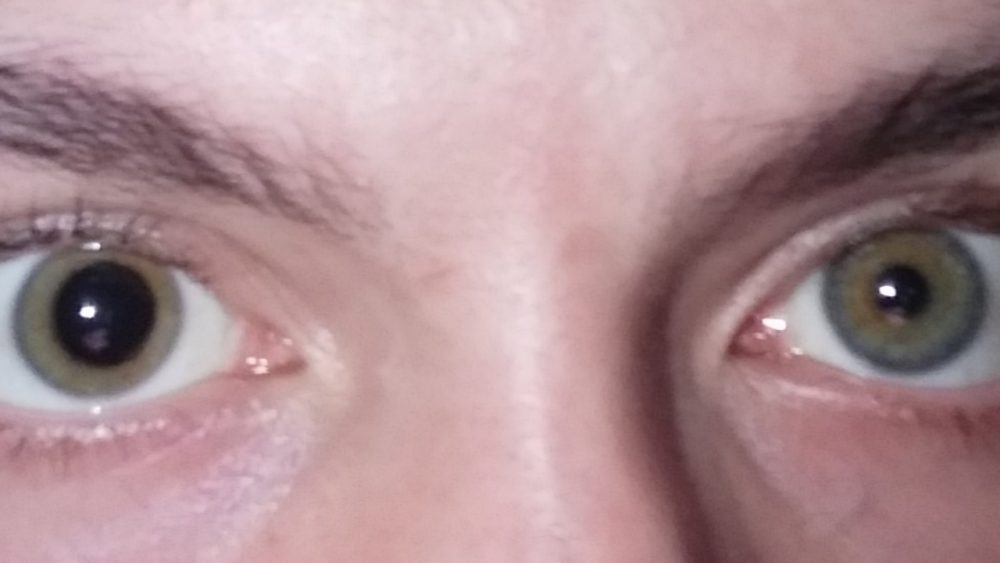
For the most part, people have symmetrical eyes, which is a fancy way of saying that their eyes are the same shape and size. But have you ever wondered what it would be like if you had pupils of different sizes? To get an idea of what this would look like, go pull up some old photos of David Bowie. As it turns out, the legendary singer had anisocoria, an eye condition in which the pupils are different sizes!
How do you get anisocoria, though? In Bowie’s case, this happened because of an injury. In most cases, though, people are simply born with this very exotic eye condition. The difference in pupil sizes may barely be noticeable, but it can cause unexpected issues, including a sensitivity to light. If your pupils were the same size when you were born and suddenly change sizes, be sure to go to the doctor: unless it was caused by an injury, this change in pupil size could be a sign that you have recently suffered a stroke or an aneurysm.
RELATED: What’s So Special About Blue Eyes?
Ocular Albinism
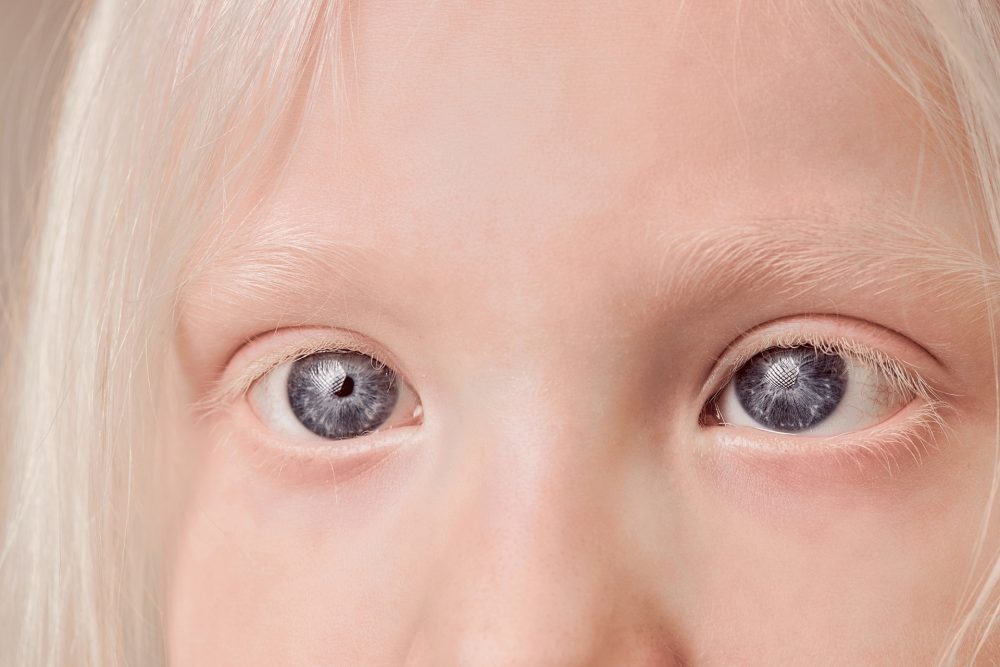
Sometimes, exotic eye conditions may give someone a dramatically different appearance. One of the best examples of this is ocular albinism, an eye feature in which a person has no pigmentation in either their iris or retina. This is usually the result of a genetic mutation, and it can alter someone’s physical appearance by making their irises appear to be very light blue.
Ocular albinism can also give someone eyes that look violet or red. While that makes for a very striking appearance, it comes at a cost: those with this condition are typically sensitive to light and have poor depth perception. Additionally, they may suffer from vision problems, involuntary eye movements, and other major issues. Fortunately, those with ocular albinism can get additional insight from their doctor about how to best treat any issues that arise due to this condition.
Heterochromia
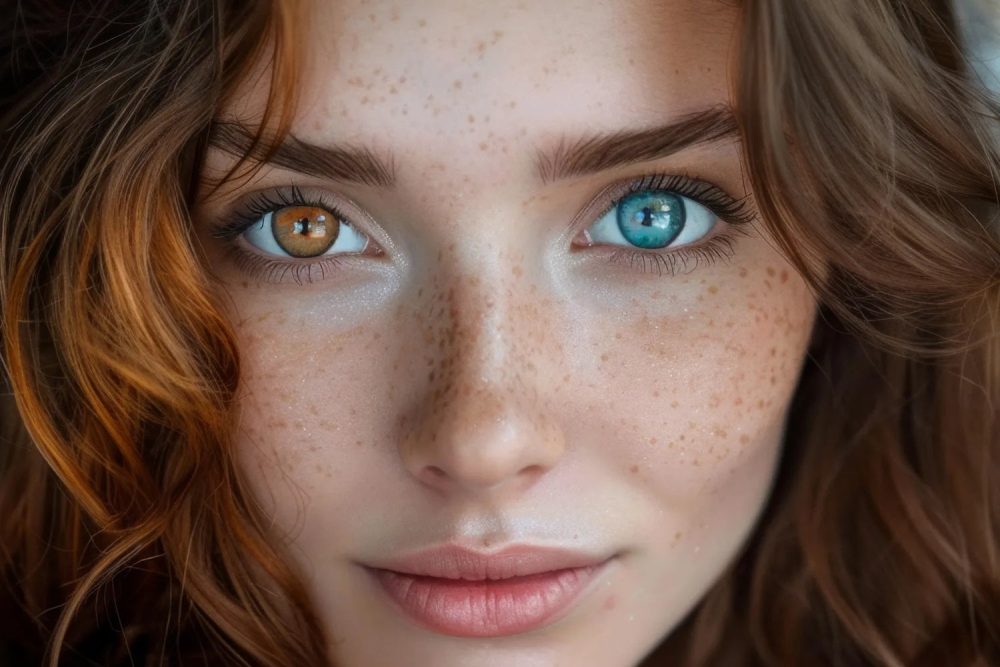
Heterochromia is probably the most well-known of the exotic eye conditions on this list. It refers to a special feature that many people would kill to have: eyes of a different color! Some people have a milder version of this, which is known (fittingly enough) as partial heterochromia. That means that while their eyes may mostly be the same color, one has a bit of another color mixed in. Perhaps the most famous example of this is Henry Cavill…look close at his baby blues, and you’ll notice that one of them actually has a bit of brown in it!
Those with full heterochromia, however, may have eyes of completely different colors. For example, famous actor Jane Seymore has one brown eye and one green eye, giving her a very striking gaze that you can’t help but stare at! Even cooler is the fact that, unlike some other conditions on this list, heterochromia doesn’t cause any other health issues. Looking really cool and otherwise feeling great? That’s our kind of eye condition!
RELATED: What’s So Special About Gray Eyes?
Polycoria
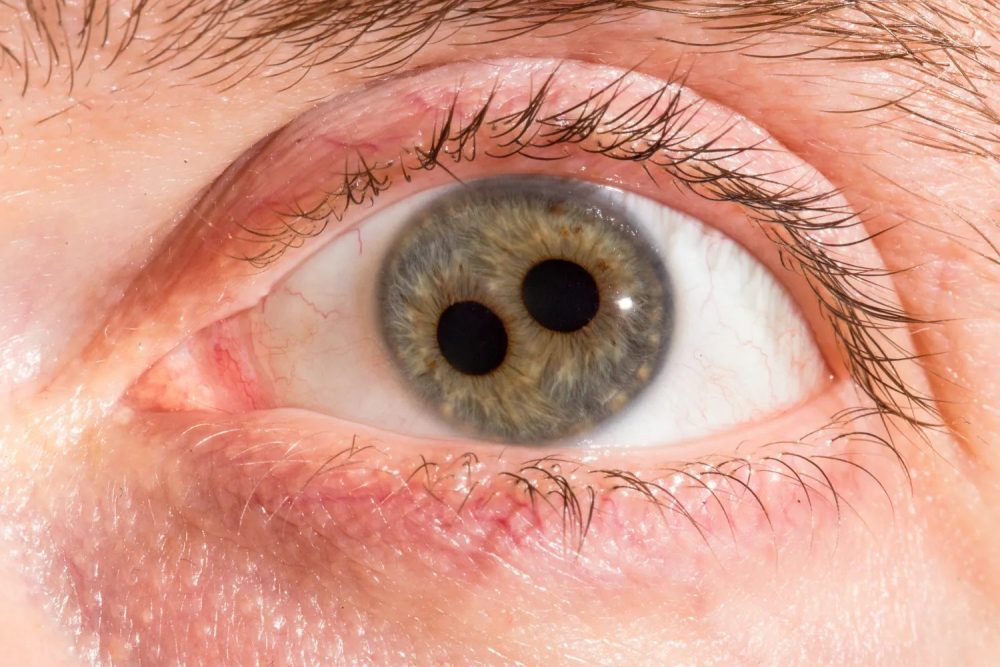
Polycoria is something that is easy to describe but difficult to process, especially when you’re staring at someone who has this special condition. If a person has polycoria, it means that they have more than one pupil. This may affect both eyes or only a single eye, and it gives the people in question a very shocking appearance. Like, imagine trying to look someone in the eye while they are talking to you and not knowing exactly where to look!
Do both pupils work? In cases of true polycoria, yes: the person simply has two functioning pupils. But there are cases of pseudopolycoria where the second pupil doesn’t actually function. Speaking of function, many with polycoria have perfectly functional vision and don’t experience any eye issues. However, a small number of those with this condition may experience issues with blurry vision. If that happens or the person simply wants to take control of their personal appearance, it is possible to combine the two pupils with a special medical procedure known as pupilloplasty.